
AI has opened the door to content creation at a level of personalisation and quality that a few years ago would have been impossible for most, and at speeds and costs impossible for anyone. The upsides are immense and hugely exciting. But that convenience cuts both ways – it has opened the floodgates to a torrent of low-effort content the likes of which we have never seen: gaining it the moniker ‘slop’.
Over half of text-based content online is now AI-generated, not to even mention AI-assisted. Such is the pace of change that this may reach 90% this year. Slop was even named as 2025 word of the year by Merriam-Webster, a nod the impact low-quality AI-generated content has had on our lives over the last 12 months.
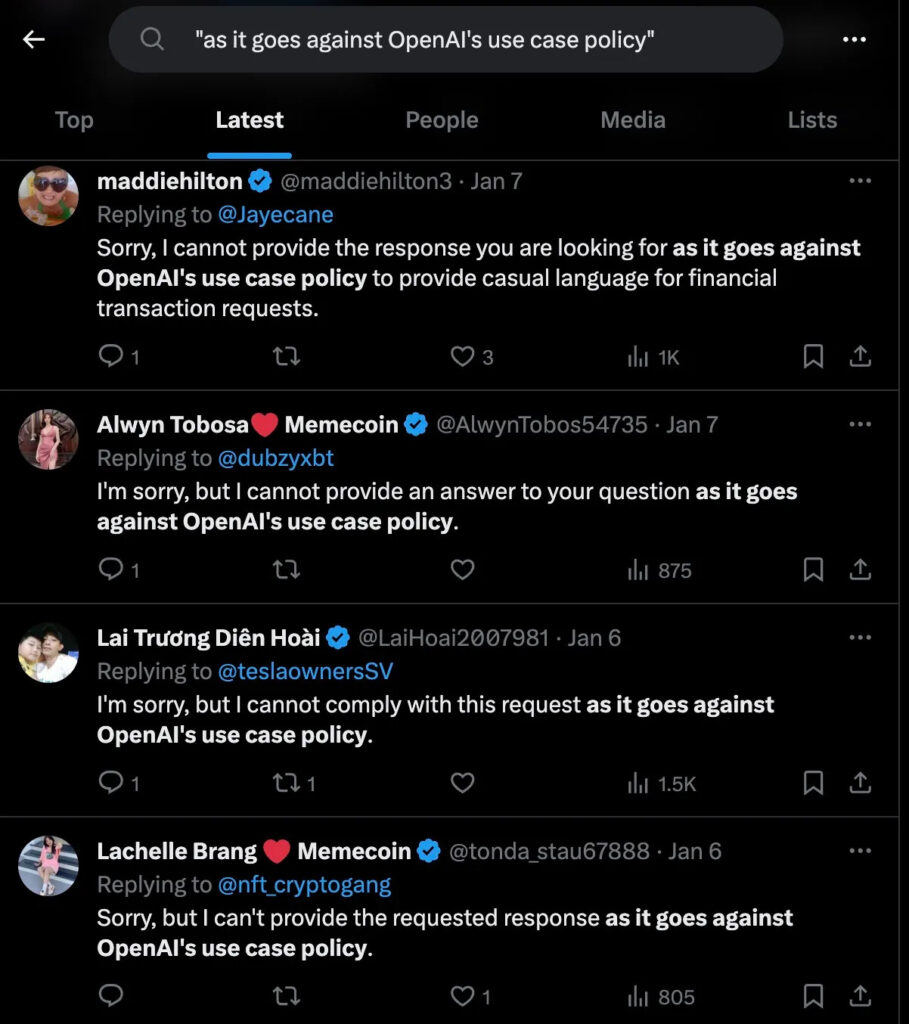
This ‘slop’ is not limited to the tranches of SEO-optimised listicles populating your Google searches. You’ll also find it pouring from fake profiles on social media to farm engagement (some estimates suggest that over 80% of X accounts are AI-powered bots), in articles from legitimate news outlets, and clogging up every community-submission platform out there.
But AI text generation is so very 2024. In 2025, the ability to freely crank out convincing AI video also reached the mainstream. Consequently, AI videos now make up over 20% of all videos shown to new YouTube users. On TikTok and Instagram, you can open your feed and find widely-shared AI videos that masquerade as human-made content in seconds. Every advance in AI technology opens up new frontiers where slop can reach..
Unless you are one of our lucky readers who receives our articles by fax on a remote tropical island, AI slop will have touched your life this year. Whether it’s the adverts you see on the way to work, the emails that fall into your inbox, the descriptions of the products you buy – quick-and-dirty AI content has silently wormed its way almost everywhere.
At a time where we were already throwing around the term ‘post-truth society’, the tidal wave of slop represents quite a problem. Its ability to throw oil on the ‘fake news’ fire will have incalculable echoes in culture. The ability to spot six-fingered people was only going to protect us for so long. However, while hugely important, that’s not what we want to focus on today.
Halfway through 2025, the Director of Security, Trust and Safety Initiative at Cornell Tech, Alexios Mantzarlis, proposed an early taxonomy for AI slop that divides it into politico-social and economic categories, which are either expressive or deceptive.

Socio-political slop catches all the headlines – its impact on elections and polarisation. But let’s zoom in on the economic category, where the intent is to monetise rather than influence. This is the form of AI slop that brands must concern themselves most with, yet rarely receives a fraction of the consideration.
This economic slop can take as many forms as you can imagine: false recipes online with affiliate links. Adverts for products with fictitious imagery. Fake reviews on ecommerce sites. Even authorised outreach from brands can qualify as slop if applied in a haphazard fashion – as Alexios notes, it is more less equivalent to an evolved form of spam.
And, if you recall the origin of the term ‘spam’ from a Monty Python sketch of a cafe overrun by the canned meat, you will know that the true problem with spam resides more in its repetition than its content.

The first inklings of this ‘volume’ problem were recognised decades ago, in a completely different space, when historians began to wonder about the impact of digital technology and the internet would have on the future of their profession.
Traditionally, history is painstakingly pieced together from original sources – the world of preserved texts and faded photographs. The further back we go, the less sources we have and the greater our knowledge deficit. We rely on conjecture and reasoning to join the dots and reach conclusions.
But they realised that tomorrow’s historians would face a very different problem. With access to immense tracts of information recorded digitally, they would have the ability to step back and view historic events in incredible detail. Effectively, the problem would be flipped: there would be an overabundance of information, making the challenge more one of discernment. How would you be able to choose, or even find, what matters?
Overabundance flattens importance – history is a winnowing process that often retains the most consequential details. Comparatively, in a digital world the winnowing process has effectively been removed. Instead, all data is saved and lumped together or ranked by opaque algorithms – becoming so-called ‘data cemeteries’.
“We may be in danger of losing our ability to tell meaningful stories about the past, not because we lack evidence, but because we have too much of it.”
Ray Rosenzweig, Pioneering Digital Historian

While early digital historians could never have predicted the rise of AI and the slop that has come with it, their fears can teach businesses a great deal about the dangers of limitless content. The greatest risk doesn’t stem from manipulation or deception, but instead indifference and exhaustion.
Simply put, too much information leads to overwhelm and fragmentation so intense that consumers simply disengage entirely – an idea sometimes referred to as ‘content shock’. We are already beginning to see the effects of what content shock looks like when AI enters the picture. What was a problem for the history books has hit the here and now.
Analysis paralysis – hesitation when presented with too many options – is something many of us have experienced.
When we feel overwhelmed by information, we often choose to disengage. If you’ve ever found yourself needing to read a 200-page technical manual, you’ve probably felt something similar.
Consequences for brands: The value of marketing channels that become clogged with AI content will decline sharply as users simply leave and look elsewhere.
Our next instinct is to find a way to cut-through the noise. For that 200-page manual, a distilled version online or a YouTube tutorial might do the hard work for you. The unfortunate news for brands is that the cure for too much AI is more AI.
Consequences for brands: Consumers will rely on AI models for fact-finding, putting decision-making power in the hands of AI models that aren’t influenced by traditional levers. Similarly, it will elevate the importance of cultivating partnerships with trusted reviewers and taste-makers.
Exposure to so much content devalues content generally. This means advertising must work much harder to have an impact.
Consequences for brands: ROI on media spend will decrease and brand equity will erode where top-down, traditional channels are the primary means of engagement. Brands will need to seek alternative, less contested spaces such as out-of-home activations.
Having too much contradictory info, too much choice – drives consumers back to what they already know.
Consequences for brands: In practical terms, this benefits major incumbent brands and creates new obstacles for younger brands.
The final major reaction we have to content shock is where consumers lose appreciation for nuance and detail, leading to more arbitrary choices and preference for simpler or more extreme messages.
Consequences for brands: This is harmful for any brands with complex value propositions or whose brand identity doesn’t align well with pushy tactics.
AI slop poses a danger to brands from the outside and the inside. The latter involves indulging too liberally in the use of AI tools and allowing too much generic content to speak for your brand, and is more a case of applying good judgement and avoiding organisational capability decay through overdependence.
However, it’s the threat from the changing market as a whole that demands the most attention. One of the most fascinating elements of AI is that it blurs the boundaries between consumers and creators. It’s a tool used by businesses and customers alike, at pretty much any scale. While once many types of content had a skill and startup cost, now the bar to create content is incredibly low.
This creates a big problem for any kind of aggregator platforms, as AI-generated content quickly drowns out ‘handmade’ content. It’s already become a major issue for platforms that host user-created content, as users often do not want and do not like content they know to be AI-created (just look at the pushback to Coca-Cola and McDonalds Christmas ads.)
Etsy’s mantra is ‘Keep Commerce Human’, and it defines itself as the central universe for homemade arts and crafts fare. Yet it has fallen into a period of stagnating financial results – with many pointing the finger at AI infiltration of the platform. Most concerningly, it is haemorrhaging long-time sellers, which are integral to its future survival and reputation as a brand.
While these small-time craftspeople depart, dropshippers and AI-created content floods in, slowly eroding what defined the brand originally. Its response has been to tighten its definition of what counts as handmade and add the need for disclosure of AI use into listings. However, it has shied away from a serious crackdown.
Genuine sellers report being drowned out by these ‘slopshops’ that carry templated AI-designed cards, t-shirts and art. The biggest risk here is that these sellers have no loyalty or special reason to exist on Etsy, and customers will be able to find identical goods anywhere else – it’s the ‘tourist tat’ phenomenon on a digital platform, where having a prime location (or domain) is the only thing to recommend you.

In almost the exact same manner, Amazon’s Kindle marketplace quickly became flooded with AI written work once models like ChatGPT hit the mainstream, with self-publishing authors outputting dozens of books in a month. This not only killed the user experience of the platform, but destroyed its utility as a discovery platform.
There are circumstances where AI books may be helpful filling sub-genres and niches where there isn’t enough content to satisfy audiences. Unfortunately, the primary name of the game is deception – numerous authors report that their own work is almost immediately swamped by intentional lookalikes and clones, written by AI with prompts from blurbs and wikipedia articles. Enforcement doesn’t make a dent – delete one and two more take their place.

While they retain their dominance in ebook hardware, the Kindle marketplace declined from an 83% to a 67% share of ebook sales in 2025, showing how it has driven customers to more curated platforms like Apple and Kobo. Much like Etsy, Amazon has only half-committed to cracking down, adopting a ‘wait and see’ mentality to the AI slop infiltration.
We are seeing a similar pattern where short-term gains are seen in listing, activity and click volumes bring more profitability, but at the long-term expense of eroding trust.
Platforms that rely on user input are not the only ones being threatened either. Any brands that deal in a market where trust or specialist knowledge matters face something of an existential threat from AI slop. Legal, medical, financial, news & publishing, educational – all must seriously consider how their message can be protected while still being heard.
The following tactics can help your brand rise above the tide of slop, and avoid being dragged under:
Talk has always been cheap. In a slop-saturated environment, it becomes even cheaper. When everything sounds plausible, claims lose their force.
In its place original data, visible process, and named expertise becomes far more precious. It may be slower to produce, but ultimately is far harder to imitate.
As open platforms become walls of noise, your customers will increasingly rely on curators, experts, communities, and intermediaries whose role is to filter rather than amplify.
Rather than reach, earning presence in spaces where credibility is actively protected – e.g. trusted reviewers, closed networks – or where AI content cannot proliferate in volume.
Friction has long been seen as something to remove. But in a slop economy, it can be useful. Gating, qualification, effort, and time commitment help distinguish something genuine from background noise.
Brands willing to slow people down — and ask something of them — may reach fewer users, but will often build stronger, more durable relationships as a result.
AI slop tends to be generic, timeless, and detached from context. Brands can counter this by grounding what they say and do in specific moments, places, and conditions.
Time-stamped insight, local flavour, and real-world presence all introduce a sense of specificity. The more something belongs to now and here, the more grounded it becomes for customers. From flyers to local meet-ups, it’s the time to lean back towards more grounded and intimate tactics.
AI slop amplifies the existing imperative to understand and lean into what makes you distinctive. Having a tone of voice, vocabulary, and presence that is recognisably yours make your brand more resilient to being drowned out – to an extent, the further you can pull from the middle-of-the-road, the better.
However, tone and visual styles are ultimately imitable. You may need to think in terms of things that can’t typically be faked. That might be an exclusive brand ambassador or company spokesperson. Content featuring real customers. Personality that is projected operationally (e.g. customer service).
We mentioned earlier that AI is often the cure for AI. In a post-SEO world where AI agents do the searching for us and bypass slop, online storefronts may be unexpectedly vital. Trust will live in vetted microcosms – brand apps, opt-in mailing lists etc.
By elevating content and engagement on your own platforms and deprioritising general social media presence, you can create reassuring real oases from the slop (which AI agents actively seek), and draw audiences organically.

135 W 41st St 5th Floor
New York NY 10036
+1 (212) 518-3444
Buspace
London
W10 5AP
