
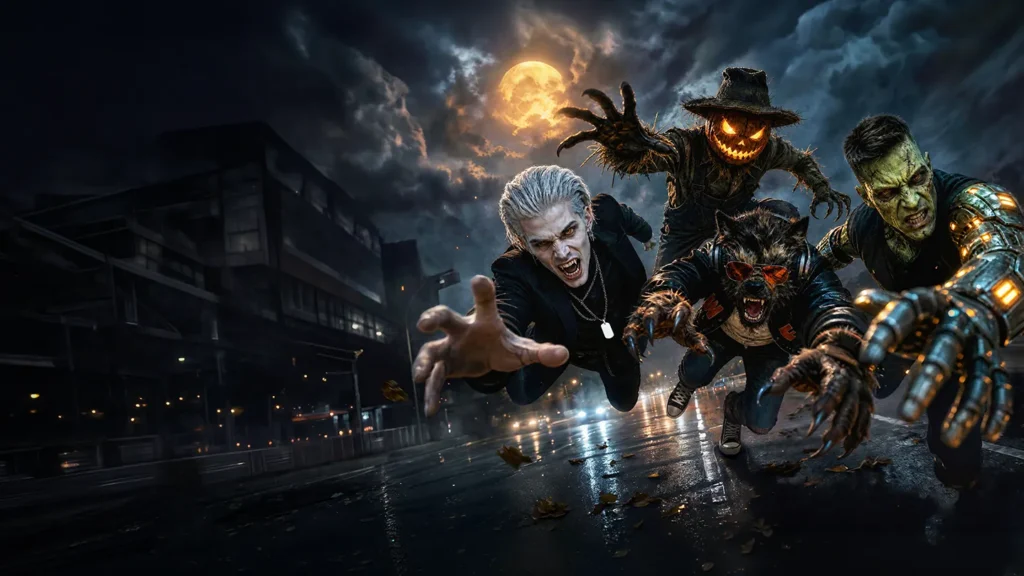
If you’ve been to the cinema over the past month or so, you may have been greeted by an AI-generated scarecrow battling a vampire, an undead cyborg and a werewolf. It’s the campaign launch video for “Fanta’s Haunted Universe”.
A lot has been said about the brand’s shift to AI with this latest “cinematic trailer” and associated assets – much of it negative. Campaign named it their “Turkey of the Week”, while comedian Limmy took it as a broader reflection of Fanta’s quality as a product: “You know if this is how much they care about this, how much they care about the stuff that’s in Fanta”.
There are undoubtedly some issues with the art direction and visual fidelity of the AI-generated launch video, which are especially pronounced on the big screen. We’ve seen online comments about cinema audiences booing the ad, and witnessed this ourselves. Maybe we joined in.
One possibility is that Fanta drew so heavily from AI-generated visuals in the knowledge that it would prompt backlash. In playfully embracing a cinematic scope and “slop” aesthetics, the brand might win some people over – accepting that it would alienate others in the process. After all, it would be remarkably naive not to expect backlash to AI usage, given the outcry in response to Coca-Cola’s successive AI-generated holiday ads.
Or perhaps the company had reason to suspect that this negative view may not be shared by the majority of consumers. In fact, some would actively like it. According to surprising research from Zappi, 35% of consumers “loved” the campaign launch video compared to the 27% norm. More notably, 36% said its use of AI made them feel more positively about it, compared to 18% viewing it more negatively. Almost half (46%) said AI use didn’t impact their view.
So, whether “Fanta’s Haunted Universe” spot is a fun piece of Halloween content or an ugly, unethical eyesore is a matter of perspective.
What has often been missed in the discussion of the brand’s AI use, however, is the intention behind this year’s campaign. With its “Haunted Universe”, Fanta aims to develop an entertainment platform with distinctive characters and stories. It is a concerted effort to create a “Universe” with its own IP – albeit not a wholly successful one, as we’ll explore.
Coca-Cola has been exploring what Halloween means to the Fanta brand for the best part of a decade, beginning with its “Taking Over Halloween” campaign in 2017. The brand shifted to big-ticket partnerships with film studios in 2023, working with studios to feature iconic horror characters like Beetlejuice and Chucky on its seasonal packaging and within its campaigns.
Fanta’s launch release describes how this year’s campaign aimed to shift Fanta “from collaborators to creators, building original characters and stories designed to grow beyond a single season”. In other words, the brand wants to reduce its reliance on other people’s IP to promote its products. This places Fanta, not its Halloween partners, at the forefront of campaigns moving forward.
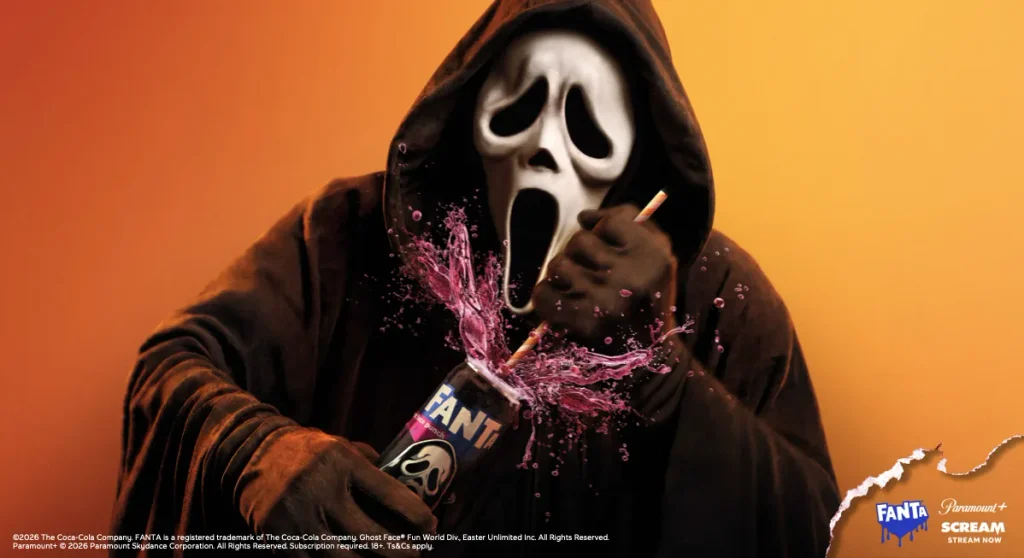
This is a matter of framing: while Scream’s Ghost Face features in this latest campaign, he is framed as “the first horror icon to enter Fanta’s Haunted Universe”. Courtesy of Paramount+ and Fun World, he’s crashing Fanta’s new brand universe to lend credibility to its four “original characters”. The central story being told is oriented around Fanta, not the Scream franchise.
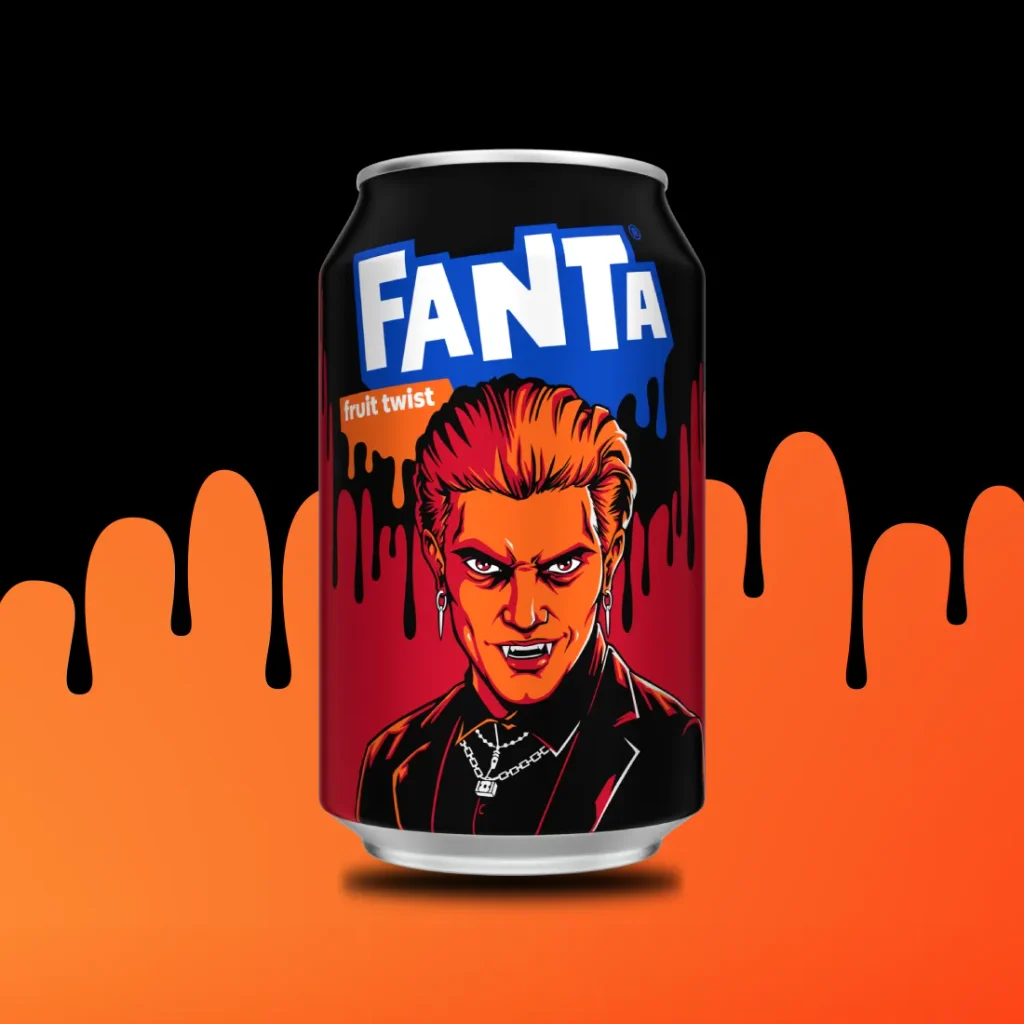
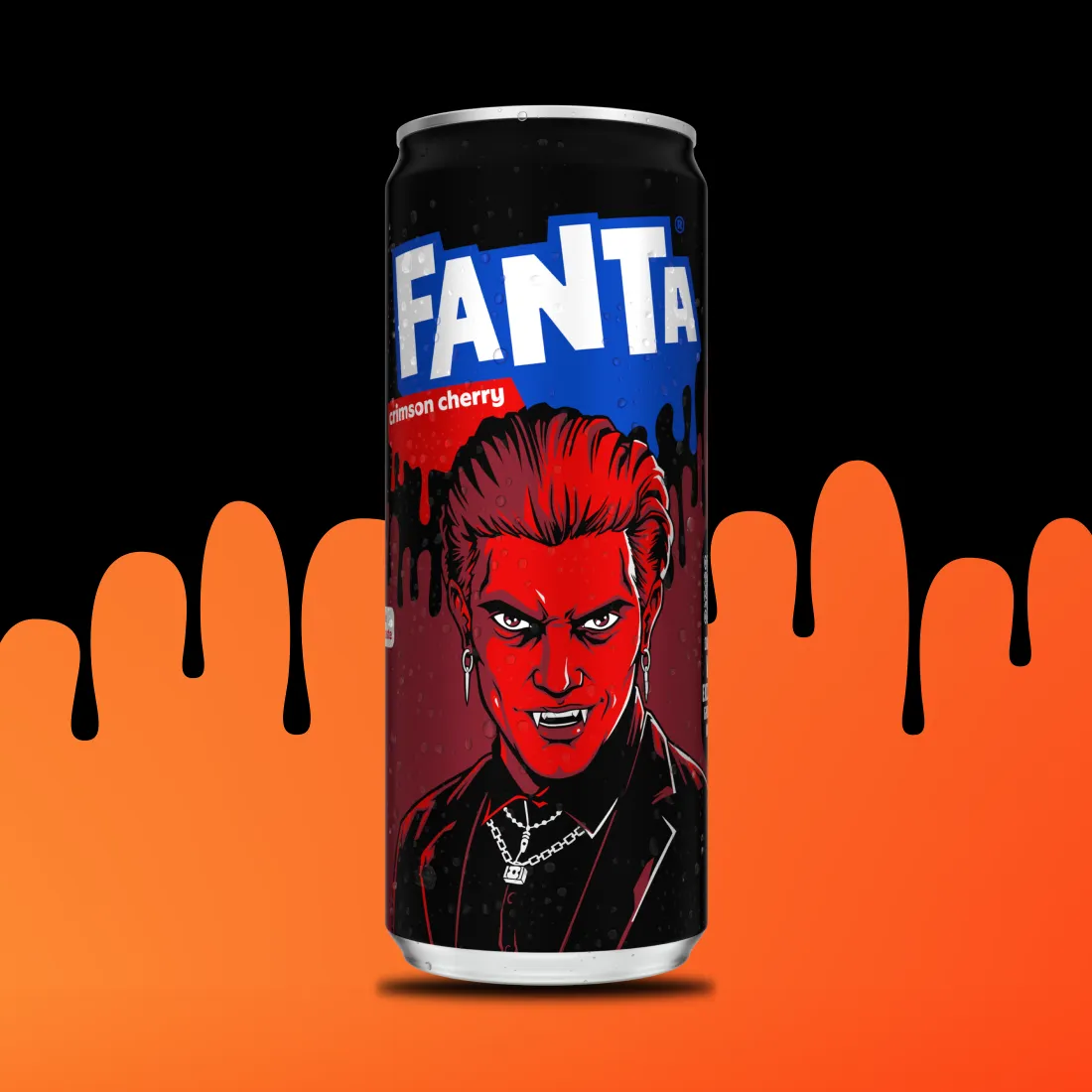
The hope is that audiences will be won over by FRNX, Fanta’s cybernetic take on Frankenstein’s monster, Howlie, a werewolf who’s inexplicably also a DJ and “brings crazy beats under the full moon,” Drayk, the aristocratic vampire party boy, and Haystacks, the pumpkin-headed scarecrow. Consumers will look forward to seeing them each Halloween, paired up with a new franchise-favourite guest.
The underlying motivation behind “the Haunted Universe” is building an association between Fanta and Halloween akin to the one between Coca-Cola and Christmas. And, through that association, Fanta wants to make new connections with younger audiences, especially Gen Z.
In the company’s own words, it hopes to reach that audience via “original storytelling, entertainment experiences and culturally relevant collaborations”. In our opinion the strategy risks not hitting the mark or the ambition. Not because it uses ugly AI visuals – although we’ve already seen Gen Zs booing AI – but because it is unoriginal.
These are characters that, while technically “new”, are so recognisable within the horror canon that they are essentially walking tropes. They are hollow signifiers that stand in for Fanta’s limited edition lemon, cherry, pineapple, and mango flavours. What’s more, depending on the market, the characters correspond to different colours and flavours. What differentiation they do have is inconsistent.

This is something that will not necessarily resonate with Fanta’s target audience. In semiotics testing on mascots that Sense Worldwide conducted for a recent client project, we found that Gen Z favoured distinctive, memorable characters.
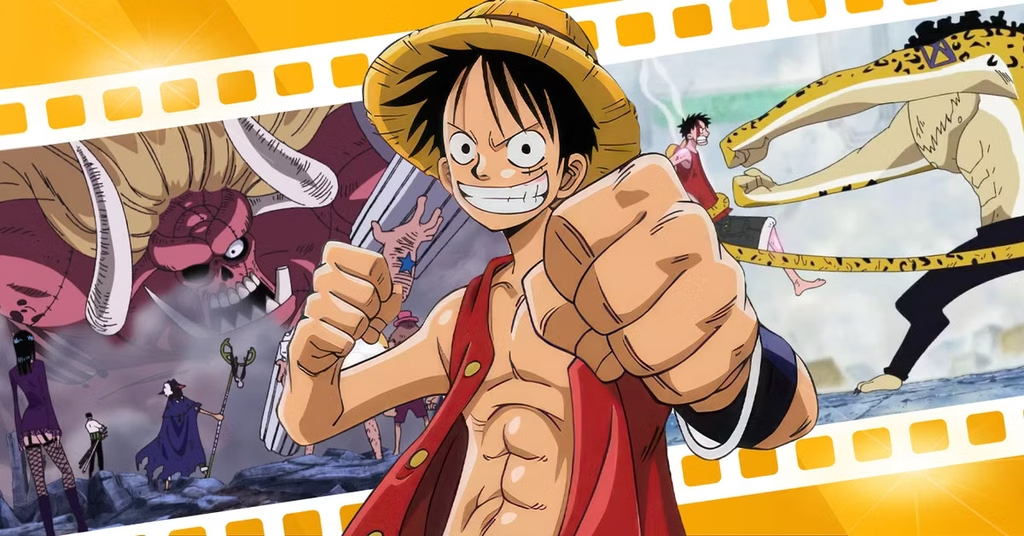
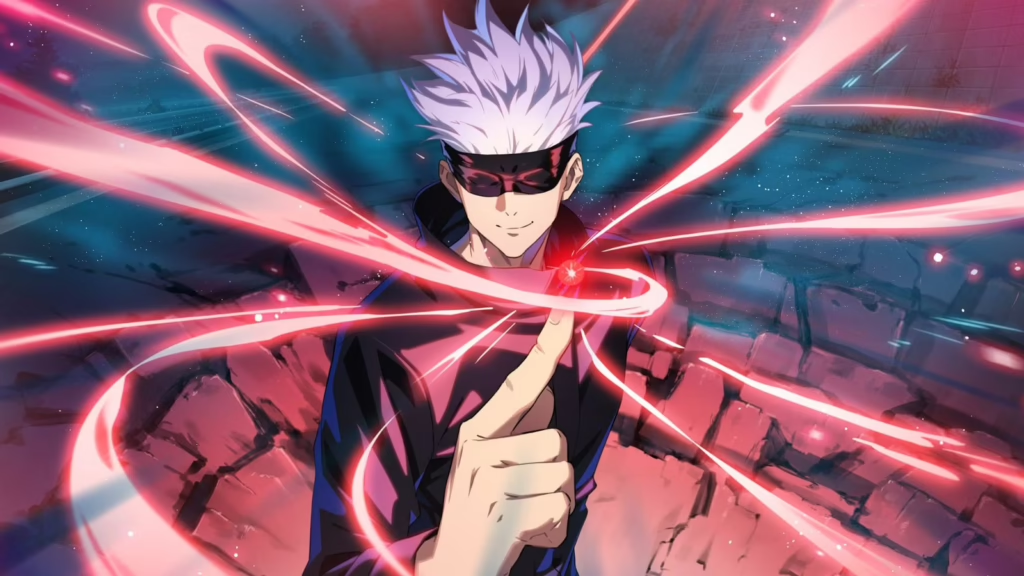
Think about the characters that have resonated the most with Gen Z in recent years. POP MART’s Labubu, and now Hirono, are defined by their idiosyncrasies. As are the anime characters of One Piece’s Luffy or Jujutsu Kaisen’s Gojo. They all have a recognisable look and complex backstories. That’s part of the explanation for their breakthrough success.
In contrast, the new characters in “Fanta’s Haunted Universe” are as generic as they come: we’ve seen a “charming vampire with a lust for the living” and a “forgotten creation running from his monstrous past” a thousand times. Why would Gen Z care whether they prevent pumpkin head Haystacks from obtaining all the world’s Fanta, reimagined as “a magic elixir”?

For brands looking to create exciting new worlds and experiences for consumers, it’s not enough to pay lip service to “originality”. They have to surprise people. Show them something new.
And that applies double if you’re going to use AI. AI use and unoriginal characters often go hand in hand, and both can generate backlash. But it’s important not to conflate the two. Someone taking issue with the environmental impact of generative AI videos is very different from someone else thinking a cyborg version of Frankenstein’s monster is boring and derivative, for example. Fanta has certainly courted both criticisms.
The “Haunted Universe” is a big swing for the brand. In the eyes of some, it’s a swing and a miss. It remains to be seen whether it will grow into a lasting entertainment platform – if its characters and stories grow season on season. We’ll have to see what happens next Halloween, and the one after that. After all, Fanta’s using the slogan “Halloween Forever”.

Want to explore the potential of entertainment platforms and brand IP to drive growth? Get in touch.

135 W 41st St 5th Floor
New York NY 10036
+1 (212) 518-3444
Buspace
London
W10 5AP
